
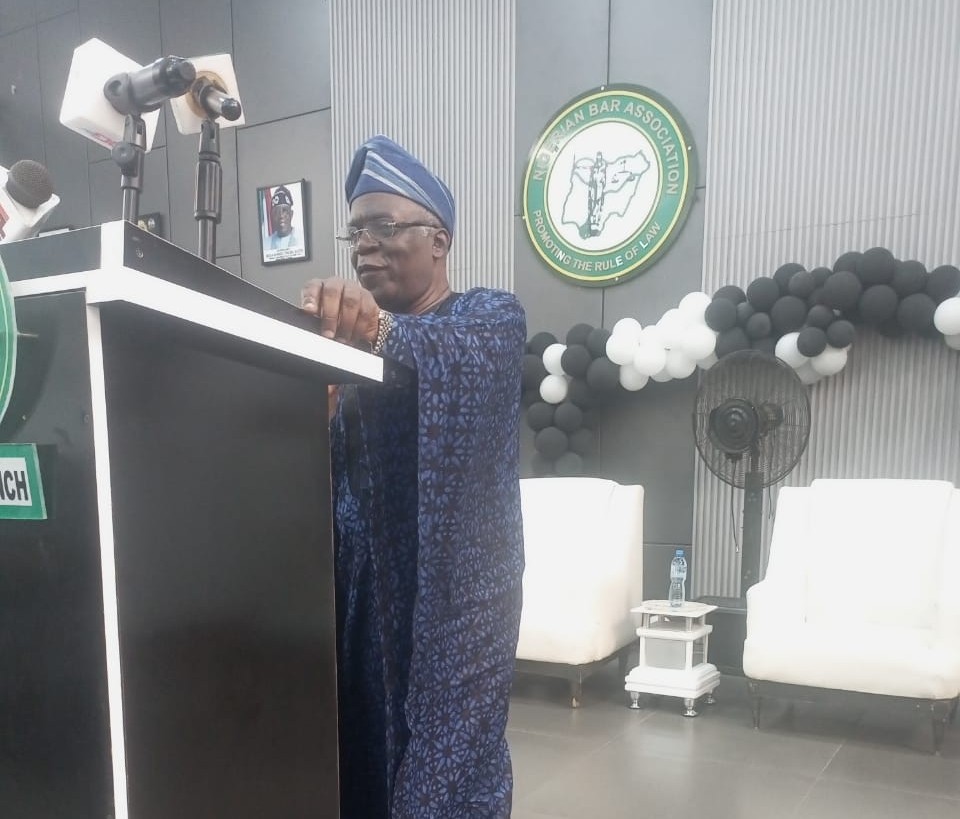
Prominent lawyer and human rights activist Femi Falana, SAN, says Nigeria is not being governed by true democracy, but by civil rule, citing judicial confusion over the forthcoming 2027 elections, the infringement of free speech via the Cybercrimes Act, and the neglect of poor Nigerians who make up the majority of the population.
Falana, SAN, declared this while delivering the 2026 Nigeria Bar Association (NBA) Ijebu-Ode Branch Annual Lecture, themed “Strengthening The Rule Of Law In A Democratic Nigeria”.
Falana, SAN, decried the recent deregistration of several opposition political parties by court orders, even as the country is only a few months away from the 2027 general elections. He said the development has left the Independent National Electoral Commission (INEC) uncertain over its election guidelines and the number of political parties contesting the elections.
Falana, who highlighted the court cases of some political parties, evoked memories of the annulment of the June 12, 1993 elections, which the military annulled on the grounds of “conflicting court rulings”, calling on lawyers and judges to rectify the current situation.
He said, “Now in our country, my first submission: what we have is not democracy, but civil rule. And the civil rule we have is currently endangered by lawyers and a few judges in the Federal High Court. As we are currently gathered here, it is not sure that we are going to have a seamless election. Four months to the election, and I will just remind you of some cases that are pending in our courts that scare some of us.
“The case of Youth Party of Nigeria and INEC. I’m sure you are aware of the challenge of guidelines issued by INEC. A judge gave his own position; another one in the case of SDP, a contradictory decision was given. So, INEC does not know now what to do with its guidelines, and the guidelines are to guide the elections that are coming up in January.
“Another case, an unknown body sued a political party and said because you have used my logo, and the Federal High Court ruled that the party represented by INEC be deregistered. Another case, five political parties were also challenged by another Nigerian that their names should not be on the ballot. Again, the Federal High Court ruled that the five political parties be registered. Now these are the main opposition parties, including NDC and ADC. I’m sure you know what has happened to PDP. You know what I mean? Somebody who is a member of the APC in Abuja and a member of the PDP in Rivers. It has never happened since 1922 when party politics started in Nigeria that you could be a member of two or three political parties. But it’s happening in Nigeria.
“The point I’m making, therefore, is: I am pleading with our colleagues and judges to ensure that we don’t go back to 1993 when the military claimed that we are annulling the election because there were conflicting judgments of our courts, even though they had their own agenda not to lose power.”
When asked by journalists after his lecture on the difference between democracy and civil rule, Falana explained that civil rule was the absence of military rule and the status of being governed by laws, rather than decrees.
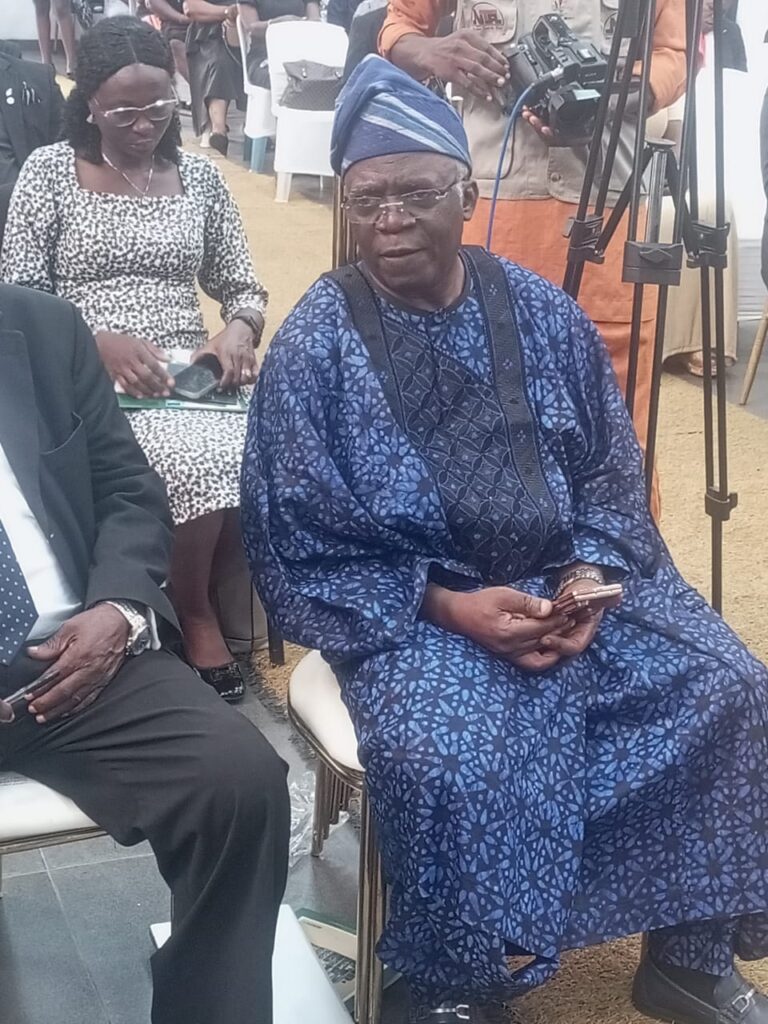
He further argued that Nigeria is not operating as a true democracy, alleging that the Cybercrimes Act is being used to suppress citizens’ freedom of expression. He added that the definition of democracy as “government of the people” does not apply to Nigeria, saying that the government does not work for the 133 million Nigerians living in multidimensional poverty, who make up the majority of the population.
He said, “Well, if you have democracy, there will be freedom for citizens to express themselves. Right now, if you write articles that are critical of government, you may be charged under the Cybercrimes Act. A democratic country will not allow that.
“Civil rule is the absence of military rule… We have elections; we are not ruled by decrees, but by laws. Democracy is majoritarian rule; the interests of the majority must prevail. So, you can’t have 133 million dimensionally poor people in Nigeria if you have democracy. The government would fight poverty to ensure that you reduce unemployment to the barest minimum. What happens now? Every four years, our people are asked to vote; what they are voting for is not even being discussed. You guys in the media are not challenging the politicians…… It’s all about ‘where does he come from?’ It’s about ethnic, religious and other primordial considerations.”
Falana also criticised the influence of global financial institutions on Nigeria’s economic policies, which he says further undermines Nigeria’s democratic standing.
“Democracy means-as they say- government of the people, by the people, and for the people. This one is not a government of the people, and that is the position in all African countries. When your economy is dictated by the IMF and World Bank, not by the Nigerian people. So, these are the issues.”
The NBA Ijebu-Ode Annual Lecture, attended by several legal luminaries, is a major highlight of the ongoing 2026 NBA Ijebu-Ode Annual Law Week, which concludes with the Dinner and Awards Ceremony on Friday.